




In honor of the new season of The Walking Dead, I wanted to take a moment to look at a smart house and how it could save your life. Whether its the strange change in the weather or the zombies banging at your door, your home may be your best defence in case of a disaster. Smart homes are becoming more popular around the country, as individuals try to reduce their carbon footprint. These smart homes are not only easy on the pocket during the best of times but they can provide some of the much needed necessities during the worst.
So what is considered a necessity when you are facing the end of the world? Depending on where you live, heat, water, shelter, and food would be consider the most important tools of survival. With a smart house all but the food can be covered easily.
Heat
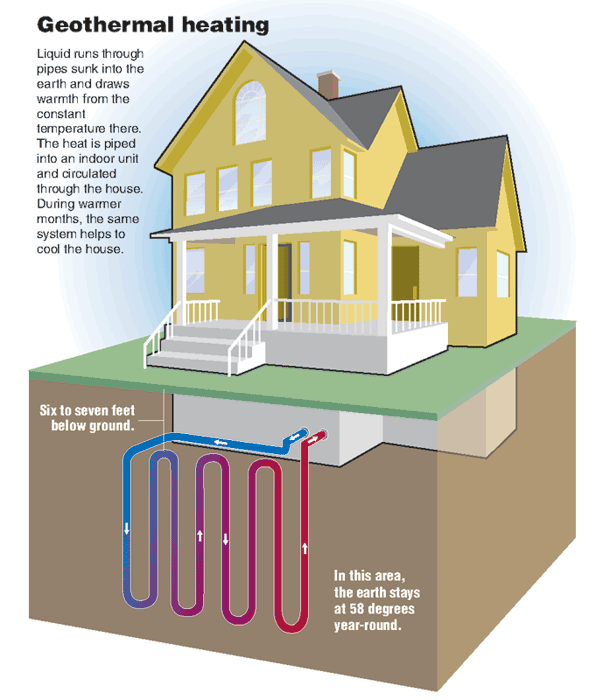
Geothermal heating and cool
In a smart house you have a couple different ways of achieving heating and cooling. Most smart house builders agree that a combination of any of these would work the best without causing too much stress on the owner or the environment. You can go with a traditional wood burning stove, Ground-air heat exchange, and solar panels.
Wood burning is one of the more common ways of heating the home however you do face a few challenges with this type of heating. The first challenge is during the summer months, depending on your location, you either have to sweat it out and be miserable, or seek alternative ways of cooling down. For most in the US, our summer temperatures average 74.29 degrees fahrenheit (23.49 degrees celsius ) with extremes of over a 100 degrees fahrenheit. The second issue is depending on the disaster, it might not be feasible to gather the wood. If we dealing with a walker infestation then going into the woods may leave you as their next meal.
Solar panels are becoming a common item that many homes and businesses are installing. They produce power by bouncing light off from crystals, either silicon or a copper-indium-gallium-selenide, that can be shaped into flexible films. The latter “thin-film solar technology” however, is not as good as silicon at turning light into electricity. To power the average american home runs about 9000 dollars for install and provides a 0 dollar power bill. In the case of disaster you would need to add a backup battery unit that charges during the day that can be used at night to keep items running. This addition adds between $500 – $1000
The third option we have for heating and cooling is very inexpensive and very passive in function. Ground-air heat exchange heating is using the natural stability of ground heat to maintain a constant temperature in the house. If you have ventured into a cave you have noticed that the temperature is simi constant inside, cool in the summer and warm in the winter when compared to the outside A cave’s temperature is roughly the same as the average annual temperature in the region where it is located. By running piping 1.5 meters below ground air is forced through the tub bring the cooler air into the house using a gravity feed. With a blower and the piping it would run you about 1000, for the heating and cooling dropping the electrical needs of the house by up to 70%
With the heating and cooling situation, I personally would use a combination of the last two. It would be easily off the grid so if the world shuts down my world minus the internet could keep going. The only reason I ruled out the wood stove is the smoke could alert possible creatures or thieves to the property causing a large chance of the disaster, if viral or walker to come beating at my door.
Shelter
Shelter is the easiest of needs for a smart home to cover since its a home it does provide shelter from the assault of mother nature. To help protect against looters and thing that go bump in the night I would also recommend installing bullet proof glass and foam insulation. There are many manufacturers that can install bulletproof glass for about 15-20 dollars more than a typical 3 panel window. With the foam insulations this protects from the house being cut open as easily also keeps the smell of living flesh inside. Foam insulation is easy to install and can be installed in an existing structure cost about 1500 dollars.
Water
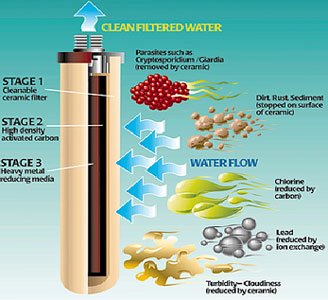
Water Filtration
Water becomes tricky when it comes to a disaster. It really depends on what type of disaster befalls the world which method of drinking water would be best. I feel this is one thing that is rarely ever covered in the end of the world fictions. For this particular necessity there is no simple answer but a combination of things needed. The major issue is where we are going to get our water from? If it is a drought that has set the world on fire most water sources will be gone. If its devastation plagues, including those that bring about walkers, then commonly accessed water can become contaminated with the disease as the victims die either in the water supply or through run off from the rains. In most situations a personal water well would be your best source of water. Unlike city water that normally is filtered creek or river water well water is normally deep underground. Natural disasters such as fire, floods and blizzards do not affect the supply of water because they are located far enough below the surface, preventing the change of the natural state of water to steam or ice. The ground also provides a natural filter to the rain water leaving most of the contaminants in the top layer of soil. Though mother nature does provide this filter, not all contaminants are removed. In the ideal situation a water filtration system should also be installed. They run between 100-1000 dollars depending on the brand you get. This includes a filter that removes solid particles from the water including sand and a Ultraviolet Light Disinfection system that will kill harmful virus and bacteria in the water.
With water shelter and heat covered a smart home may be your best defence when it comes to survival. With all the creature comforts of home this would be a good way to live out the disaster, unless you want to be cooped up in a prison like Rick and Daryl.
Prices are based on materials and labor quotes from home depot for West Virginia. www.homedepot.com For more infomation on building oyur own smart home visit http://www.buildinggreen.com/

This makes the garage the ideal remodeling space to consider for additions to your
home. A good example of these insulators is the soundproof panel that you
can simply hang on the walls of the room. There are many types of home theater systems available out there on the
market.